






























Ottoman Empire Turkish Sword – History, Design, and Legacy
The Ottoman Empire Turkish Sword stands as a symbol of strength, conquest, and master craftsmanship. For centuries, Ottoman warriors carried these swords across Asia, Europe, and the Middle East. As a result, the sword became one of the most respected weapons in military history.
Origins of the Ottoman Turkish Sword
The Ottoman Empire emerged in the late 13th century. During its expansion, the need for reliable weapons became essential. Ottoman blacksmiths developed swords that combined flexibility with cutting power. These blades helped soldiers succeed in both cavalry and infantry combat.
Moreover, Ottoman sword design was influenced by Central Asian, Persian, and Islamic traditions. Over time, craftsmen refined the blade shape. However, they never compromised on balance or strength.
Design and Craftsmanship Excellence
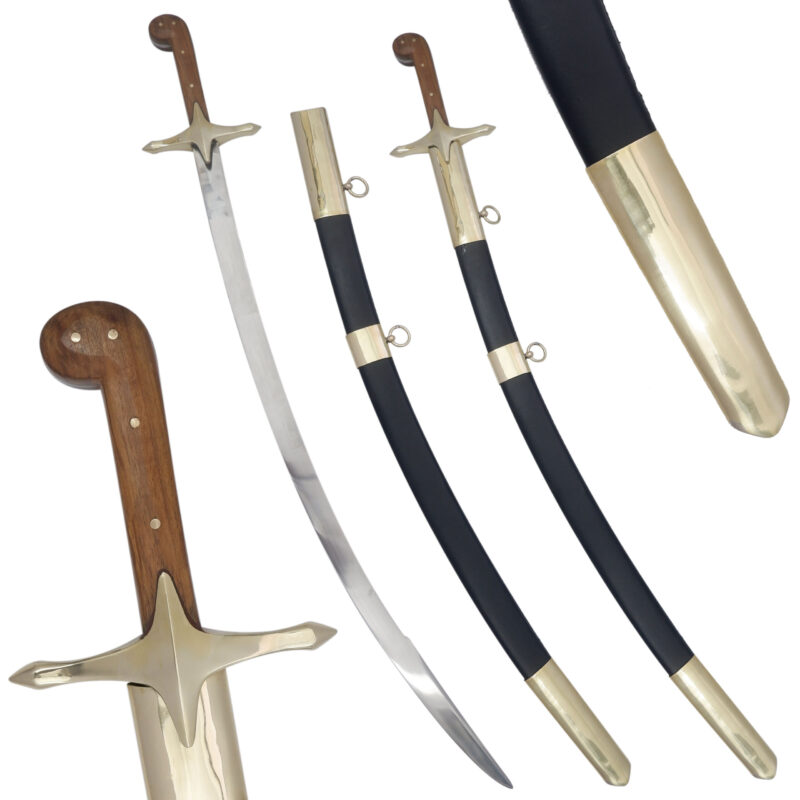
The Ottoman Empire Turkish Sword typically features a curved blade. This curve allows powerful slashing attacks. High-carbon steel gives the blade durability and sharpness. Skilled artisans forged each sword by hand, ensuring precision.
In addition, the hilt often includes brass, silver, or steel fittings. Leather or ray-skin grips improve handling. Decorative engravings frequently display Islamic calligraphy or royal symbols. Because of these details, each sword holds artistic as well as military value.
Types of Ottoman Turkish Swords
Several sword types existed during the Ottoman period. The Kilij was the most famous. It featured a broad, curved blade designed for powerful cuts. Another notable type was the Yatagan, known for its unique grip and forward-curved blade.
Each sword served a specific battlefield purpose. Nevertheless, all shared common traits of strength, balance, and craftsmanship.
Role in Ottoman Warfare
Ottoman soldiers relied heavily on swords in close combat. Cavalry units used them during fast attacks. Infantry soldiers carried them as sidearms. Because of their effectiveness, Ottoman swords became feared across Europe.
Furthermore, elite units such as the Janissaries carried finely crafted swords. These weapons reflected both rank and honor within the army.
Cultural and Symbolic Meaning
Beyond warfare, the Ottoman Turkish Sword symbolized authority and justice. Sultans often carried ceremonial swords during coronations. Religious and military ceremonies also featured swords as sacred symbols.
Even today, Ottoman swords represent pride and heritage. Museums and collectors preserve them as valuable historical artifacts.
Why the Ottoman Empire Turkish Sword Still Matters
The Ottoman Empire Turkish Sword connects history with craftsmanship. It reflects military innovation and cultural identity. Because of this, it remains admired worldwide.
Collectors, historians, and enthusiasts value authentic replicas for their timeless design. Therefore, the sword continues to influence modern ceremonial and decorative weapons.